
Your board exams are finally over. You put down your pen, take a long breath, and think, “Finally, some rest.” But then, within days, you remember: CUET 2026 is just around the corner.
Trust me, you’re not the only one going through this. Every single year, lakhs of Class 12 students wake up after their last board paper and suddenly remember, “Oh no, CUET is next.” Between school, tuitions, practicals, and the pressure of boards, CUET prep almost always gets pushed to “I’ll start tomorrow.” And tomorrow keeps coming.
But here’s something worth knowing plenty of students who cracked CUET and got into DU, JNU, and BHU weren’t the ones who started in Class 11. They were the ones who started smart, even with just 60 days on the clock. A Best Crash Course for CUET 2026, the right strategy, and some real consistency that’s genuinely all it takes.
So if you’re reading this thinking it’s too late, it’s not. This guide breaks down everything you need the exam pattern, which subjects to prioritize, the Best Crash Course for CUET 2026 options available right now, and a day-by-day plan you can actually follow. Read it once. Then get to work.
What Is CUET 2026 and Why Should You Take It Seriously?
Let’s be real if you’re a Class 12 student, you already know what CUET is. You’ve heard it in school, from parents, from that one friend who started coaching in Class 11 and won’t stop talking about it.
What most students don’t realise though, is how doable it actually is. The entire CUET syllabus pulls straight from your Class 12 NCERT books the same ones you’ve been reading all year for boards. You’re not starting from zero. You’re just redirecting what you already know into a different kind of exam.
CUET 2026 is scheduled between May 11–31, which means the clock is ticking but it’s not over. Not even close.
Understanding the CUET 2026 Exam Pattern
Before you start preparing, you need to know what you are preparing for. Here’s a clean breakdown of the CUET 2026 exam pattern:
| Section | Content | Questions | Marks |
| Section I | Language Test | 50 | +5 / -1 |
| Section II | Domain-Specific Subjects | 50 per subject | +5 / -1 |
| Section III | General Aptitude Test | 50 | +5 / -1 |
The exam is Computer-Based (CBT) and consists entirely of Multiple Choice Questions (MCQs). There is a negative marking of -1 for every wrong answer, so guessing randomly is a bad idea. Accuracy matters just as much as speed.
Why a Pratigya Crash Course Is the Smartest Move Right Now
Let’s be honest not every student starts CUET preparation a year in advance. Most Class 12 students are juggling board exams, tuitions, and everything in between. A Pratigya CUET Crash Course is designed exactly for this reality.
Pratigya, The Best Crash Course for CUET does not try to teach you everything from scratch. Instead, it helps you:
- Revise smartly: focusing only on high-weightage topics
- Practice efficiently: through daily MCQs and full-length mocks
- Stay consistent: with structured daily classes and accountability
- Eliminate panic: by giving you a clear roadmap
Research and toppers consistently agree: the difference between an average score and a 700+ score is made in the last 60 days. through smart revision, not last-minute cramming.
Subject-Wise Crash Course Strategy
Section I: Language (English or Hindi)
Most students treat the language section like an afterthought. Big mistake. This section sets the tone for your entire paper, and if your reading speed is slow or your vocabulary is shaky, it will cost you time across every other section too.
What actually needs your attention here:
- Reading Comprehension: CUET throws three types of passages at you: factual, narrative, and literary. Factual ones are the easiest to score in, so don’t leave marks on the table there. Literary passages need a bit more practice the language can get tricky.
- Vocabulary and Grammar: One-word substitutions and fill-in-the-blanks show up almost every year. Don’t memorise long word lists blindly. Learn words in context: it sticks better and actually helps in comprehension too.
- Verbal Ability: Sentence rearrangement trips a lot of students up. The trick is to find the opening and closing sentence first, then build the middle. Practice this daily and it becomes almost mechanical.
One habit that quietly does a lot of work read one newspaper editorial every morning. Doesn’t matter if it’s The Hindu or Times of India. Just do it daily. Your comprehension speed will improve, your vocabulary will grow, and you’ll absorb current affairs without even trying.
Section II: Domain Subjects
This is the section that universities actually look at when shortlisting. Your domain subject score is what gets you into the college and programme you want. Don’t treat it like revision treat it like the main event.
If you’re a Science student:
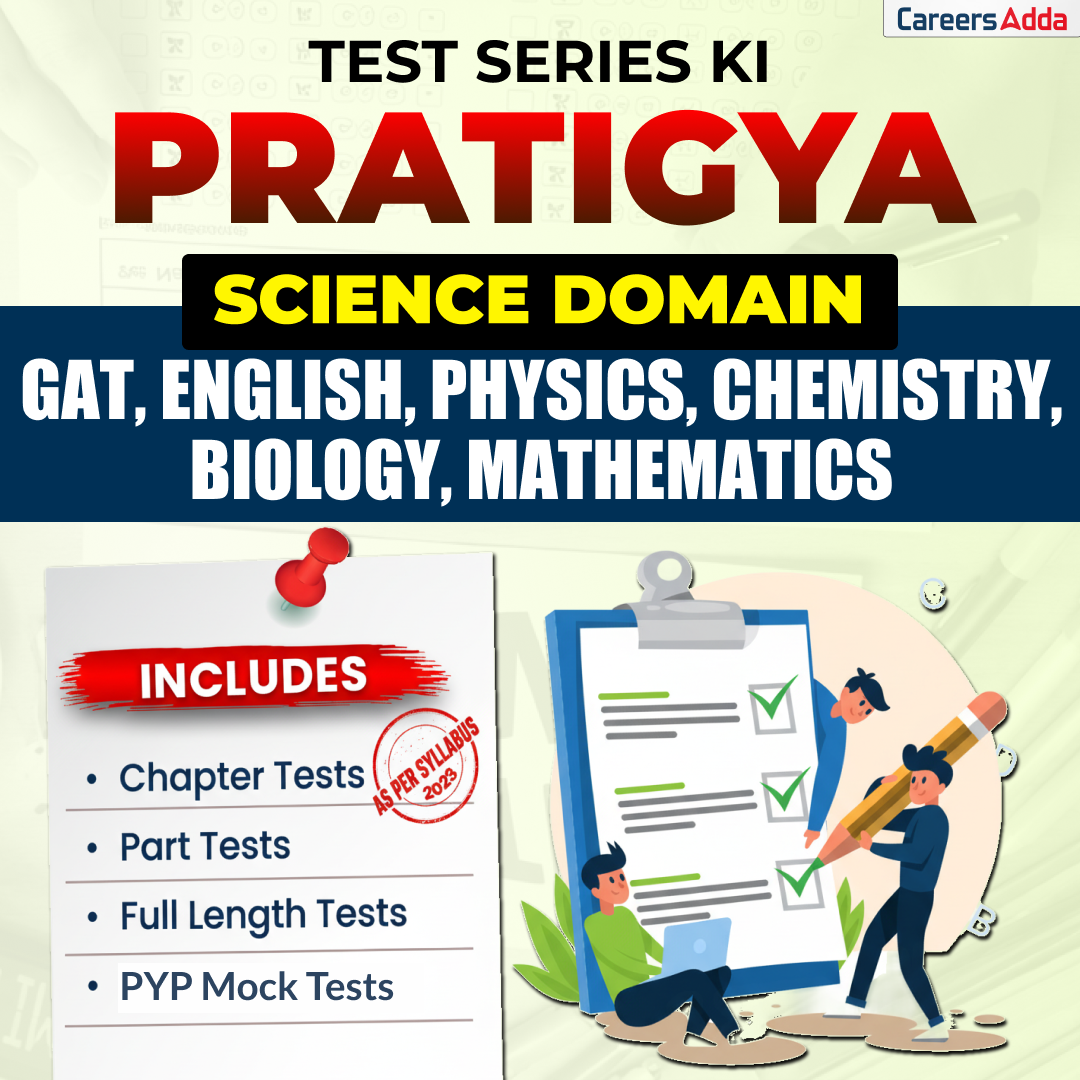
- Physics: Don’t try to cover everything. Electrostatics, Current Electricity, Optics, and Modern Physics come up consistently. Master those first, then fill gaps.
- Chemistry: Organic Chemistry is where most Science students either gain or lose marks. Know your reactions cold. For Inorganic, P-block elements are a recurring favourite.
- Biology: Genetics and Ecology chapters are high yield. Human Physiology diagrams are worth spending time on CUET loves diagram-based MCQs.
- Mathematics: Integration, Vectors, 3D Geometry, and Probability. These four alone can carry your Maths score if you practice them enough.
If you’re a Commerce student:
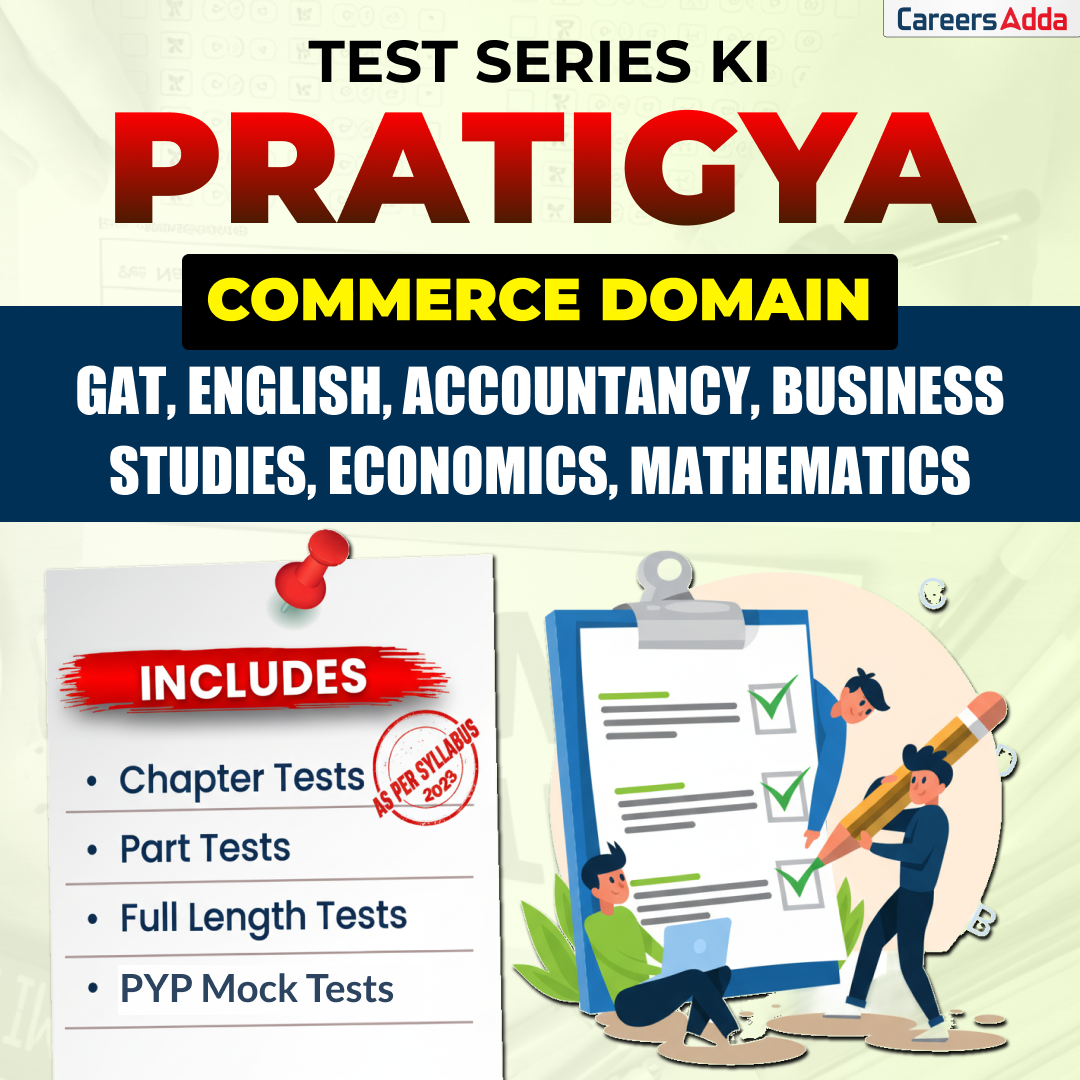
- Accountancy: Partnership accounts and Cash Flow Statements are where the marks are. Don’t skip the theory questions either they’re easier than they look.
- Business Studies: Management functions and Marketing Management are almost guaranteed to appear. Learn the definitions clearly, not vaguely.
- Economics: Macroeconomics is more important than Micro for CUET. National Income and Indian Economy chapters deserve extra time.
If you’re a Humanities student:
- Political Science: The Indian Constitution chapters are dense but very scorable. Cold War and Contemporary World Politics are equally important.
- History: Part III of Themes in Indian History is the one most questions pull from. Prioritise it over everything else in History.
- Sociology: Indian Society and Social Change and Development are the two units that appear most. Stick to NCERT language when answering it matches the answer keys closely.
- Psychology: Attention, Perception, and Psychological Disorders are the chapters worth spending the most time on.
Here’s the one thing that changes everything for domain subjects go back to your NCERT textbook before anything else. Not notes, not shortcuts. The actual book, chapter by chapter. CUET questions are built almost entirely on NCERT text, and students who know that book well don’t get surprised by anything on exam day.
Section III: General Aptitude Test (GAT)
This is the section that makes Commerce and Humanities students nervous and Science students overconfident. Neither reaction is helpful.
The GAT has three moving parts:
- Quantitative Aptitude: You don’t need advanced maths here. Percentages, Ratios, Time and Work, and Data Interpretation cover most of what shows up. If numbers aren’t your strong suit, these four topics alone are enough to keep your score respectable.
- Logical Reasoning; Blood Relations, Syllogisms, and Coding-Decoding are the most commonly tested areas. They look confusing at first but follow fixed patterns. Once you recognise the pattern, these become the fastest marks in the paper.
- Current Affairs and GK: This is where students either gain an easy edge or throw away free marks. Stick to the last 6 to 12 months of news. Focus on government schemes, science and tech updates, and major national/international events. Don’t try to memorise everything look for themes and recurring topics.
The one habit that makes the biggest difference in GAT solve 20 reasoning questions every single day. Not 100 on Sunday. Twenty, every day. And spend at least 20 minutes on the news each morning. Small daily inputs compound into a huge advantage by exam day.
Why Careers Adda Pratigya Crash Course is Worth It for CUET UG Preparation
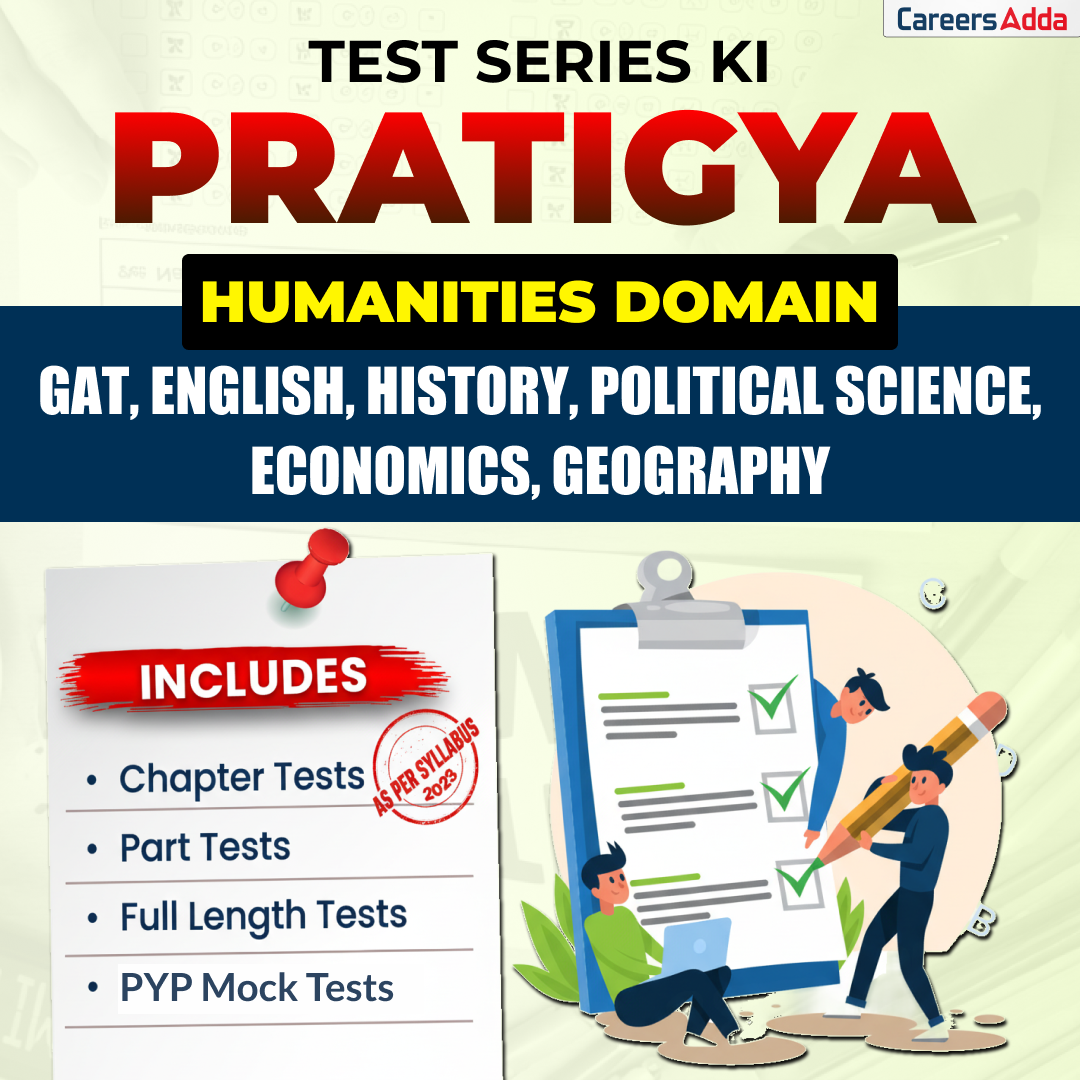
If you are seriously preparing for CUET UG, the Pratigya Crash Course by Careers Adda is one of the most well-structured options available right now. Designed for students targeting top universities like Delhi University, BHU, JNU, and JAMIA, this CUET crash course covers all three CUET sections: Language, Domain Subjects, and GAT for Science, Commerce, and Arts streams.
The course offers 200+ hours of live interactive classes along with 24/7 access to recorded lectures, so you can study at your own pace without missing anything important. Printed study material is delivered directly to your home, and doubt-clearing support is available through the app and Telegram groups.
What truly makes Pratigya Crash Course reliable is its experienced faculty team educators with years of mentoring thousands of CUET aspirants combined with full-length mock tests, DPPs, and regular assessments that keep your preparation on track.
Taught in Hinglish and accessible on any device, Pratigya fits easily into any student’s routine. If you want focused preparation with expert guidance and complete syllabus coverage, this course is genuinely worth considering.
The 60-Day Best Crash Course for CUET 2026 Plan
Here’s a realistic week-by-week breakdown you can follow right after your board exams:
| Week | Focus |
| Week 1–2 | Rapid NCERT revision of all domain subjects + Language practice |
| Week 3–4 | Topic-wise MCQ practice + Speed building |
| Week 5–6 | Full-length mock tests + Score analysis + Weak area improvement |
| Week 7–8 | Final revision, formula sheets, current affairs, exam strategy |
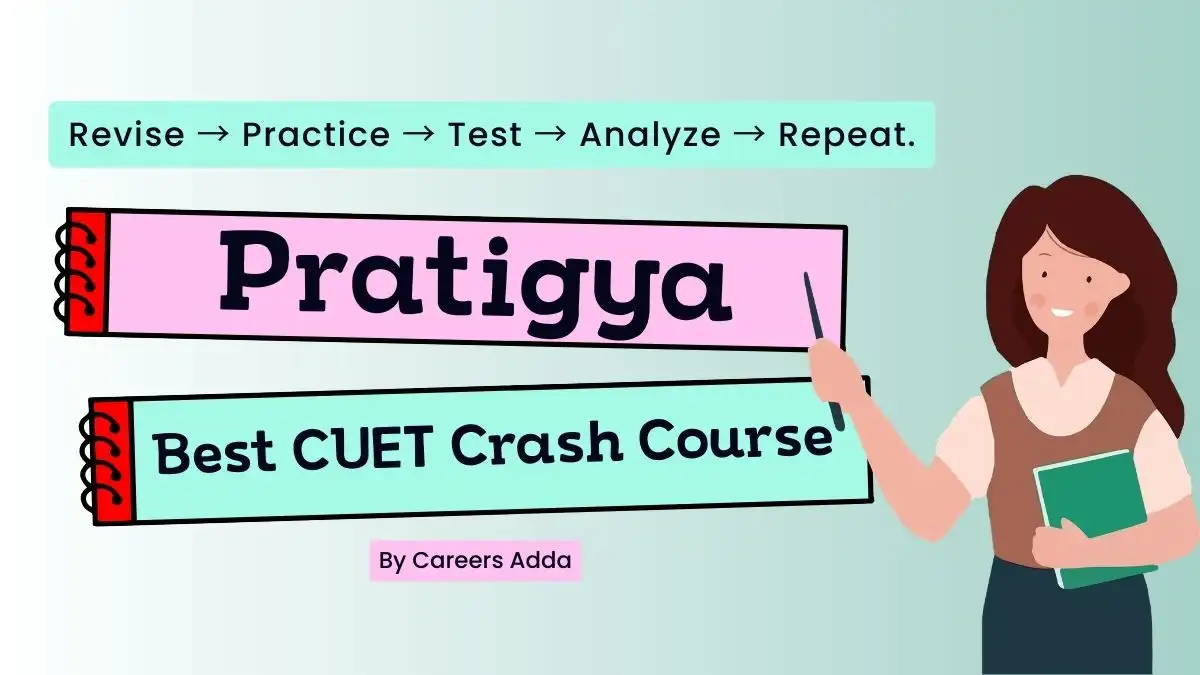
The rule is simple: Revise → Practice → Test → Analyze → Repeat.
7 Pro Tips to Maximize Your Crash Course Results
Habits That Actually Move Your Score
- Give Mock Tests Like It’s the Real Exam: Three full mocks every week not when you feel ready, starting right now. Sit down, set the timer, no phone beside you. You get better at CUET by doing CUET under pressure, not by reading about it.
- Stop Checking Your Score, Start Reading Your Mistakes: After every mock, spend 15 minutes on every wrong answer. Not your total score your mistakes. Why did you get it wrong? Concept gap, carelessness, or time pressure? Find the reason. Fix it. That one habit adds more marks than any extra chapter will.
- Write Short Notes While You Revise: Ten minutes per chapter, in your own words, right after you finish it. Messy is fine. Shorthand is fine. These notes will feel pointless in Week 2. In the last week before the exam, they will feel like a lifeline.
- Study in Focused Blocks, Not Long Stretches: Forty-five minutes of real focused work beats three hours of half-distracted studying every single time. Short sessions, proper breaks, repeat. Your brain retains more and burns out less.
- Phone Out of the Room, Not Silent, Not Flipped Over: If it is within reach, it will be picked up. Every time that happens, your focus takes 15 to 20 minutes to fully come back. Put it in another room and watch how differently your study sessions feel.
- Sleep Is Part of Your Preparation: Seven to eight hours is not laziness, it is strategy. Your brain stores everything you learned during deep sleep. Cutting sleep does not give you more study time. It just makes the time you have less effective.
- Stop Watching What Everyone Else Is Doing: Group chats full of “I’ve finished three subjects already” will mess with your head faster than any tough mock test. Mute them. Your preparation timeline is yours alone. Run your own race.
Final Thoughts: Your 60 Days Start Now
Your Foundation Is Already There You have survived boards. Your NCERT knowledge is not zero, it just needs to be pointed in the right direction. That is exactly what a crash course does.
Consistency Beats an Early Start Every Time No one gets into DU or JNU because they began preparing in Class 11. They get in because they stayed consistent, practised smartly, and did not waste the final stretch.
Sixty Days Is More Than Enough Start today. Not this weekend, not after one more YouTube video. Today. Sixty focused days can genuinely change where you land next year.



 Pratigya: Best CUET Commerce Crash Cours...
 MP Board 12th Result 2026 (Out Soon), Ch...
 CUET UG Physics Important Questions 2026...









 Call
Call 




